Discover your inner citizen scientist with a self-guided adventure in our parks. Follow and join our projects on iNaturalist to document local plants and wildlife, share your observations and help support the health of our local ecosystem.
This FREE, self-guided program is open to all children and adults. No experience needed, just curiosity and a smartphone. Make sure to wear sturdy, comfortable shoes with good grip to keep you steady on the path.
September 2026 BioBlitz
(Subject to change)
BIOBLITZ Parks for Pollinators is a national campaign coordinated by the National Recreation and Park Association to raise awareness and encourage community involvement in the pollinator crisis through local Parks & Recreation departments.
Start your BioBlitz adventure during the month of September at the Garden of the Five Senses and join us on a virtual hike. Along the trail, use the iNaturalist app to identify and learn about the plants, animals and habitats found throughout the park. After making an identification, log your observation in the active BioBlitz project to help contribute valuable data that supports community science and a better understanding of North Port's local ecosystem.
This project is not limited to one location. Observations can be submitted from anywhere within the City of North Port, whether you are exploring a park, walking a neighborhood trail or spotting pollinators right in your own backyard. Every observation helps paint a clearer picture of our local ecosystem.
Parks for Pollinators 2026: CoNP Parks & Recreation
How to Use iNaturalist
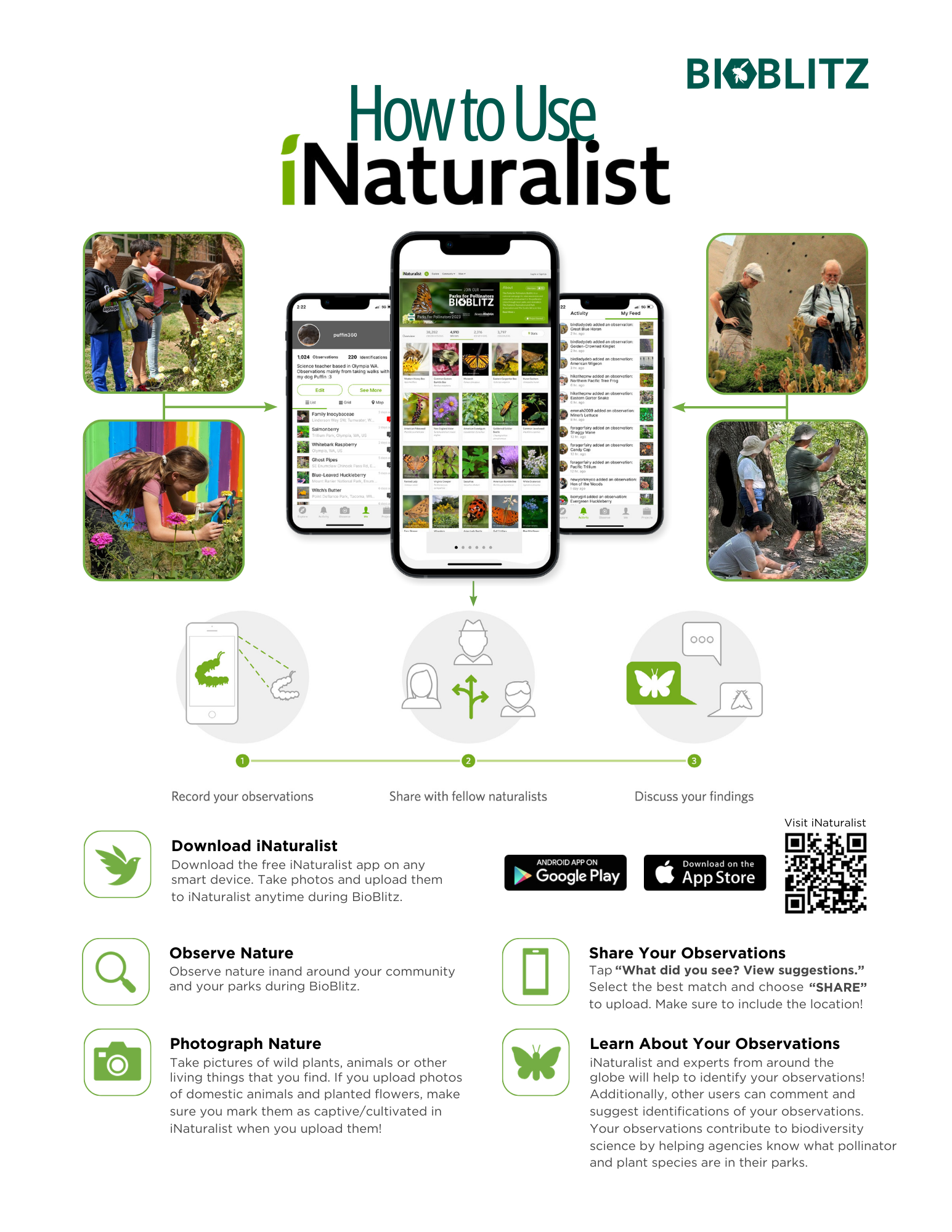 (PDF, 7MB)
- Download the iNaturalist app and create your account
- Search for "npparksandrec" (North Port Parks and Rec) and follow the page
- Find the search bar and enter "City of North Port" and select the most recent project to add your observations
- Simply explore the designated park/area included in the project at your own pace, take pictures of plants, insects, and animals, and see what species are present during your visit. Your observations will contribute to a scientific inventory of pollinator species, essential to our environment.